
The Fulshear Guide to Tackling Sever’s Disease
Keeping Kid Athletes in the Game!
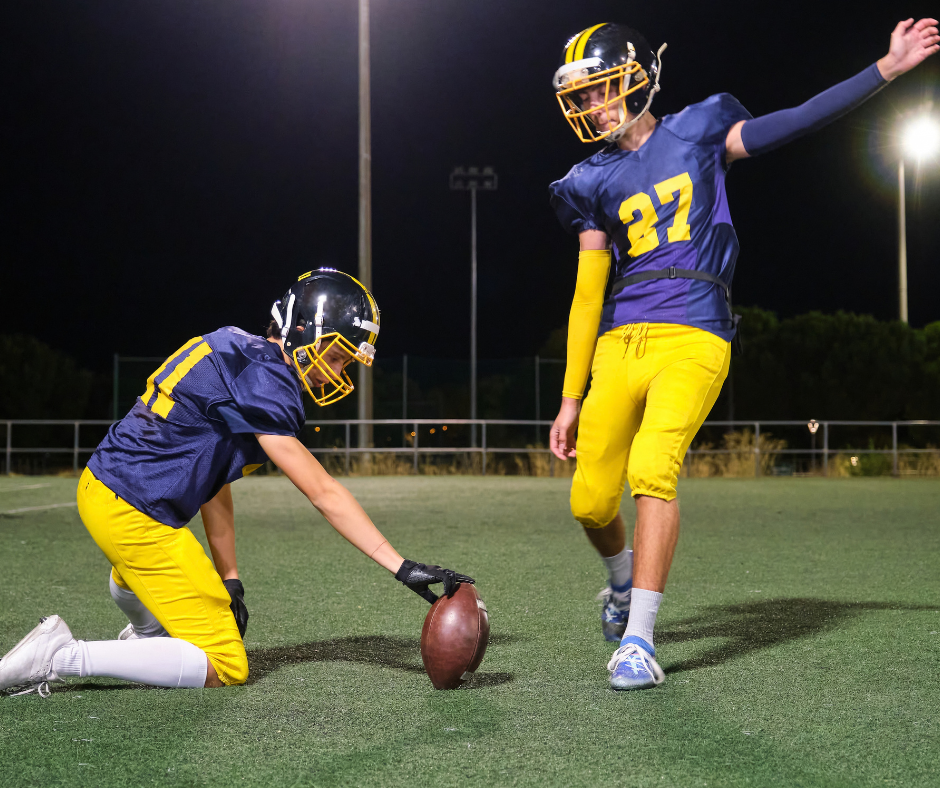
October in Fulshear means Friday Night Lights. But the intense demands of youth football and competitive cheerleading often bring an unwelcome guest to the mid-season: pediatric heel pain.
If your 8- to 14-year-old athlete is suddenly walking with a severe limp after practice, complaining of sharp pain at the back of their heel, or refusing to let you touch the back of their foot, they might be suffering from Sever’s Disease.
As a parent, seeing your child sidelined is frustrating, especially when coaches or athletic trainers suggest the pain is just a phase. Here is how you can perform a quick at-home check for Sever’s Disease, why football cleats are the primary culprit, and how modern care at Fulshear Foot and Ankle can fast-track their recovery.
The At-Home “Squeeze Test”
Sever’s Disease (calcaneal apophysitis) is an inflammation of the growth plate located at the back of the heel. It occurs when a child’s bones grow faster than their tendons, causing a tight Achilles tendon to pull and grind against the cartilage of the heel bone.
Because Sever’s affects the bone itself, it presents differently than a standard blister or a bruised heel pad. To check if your child might have Sever’s Disease, you can perform a simple “squeeze test” at home:
- Have your child sit comfortably with their leg relaxed.
- Gently squeeze the back of their heel bone from both the left and right sides simultaneously (near the Achilles attachment).
- If this lateral pressure causes them to wince, pull away, or report sharp pain, the growth plate is highly inflamed.
The Football Cleat Problem
Why does this pain peak in October? Football and cheerleading demand explosive, high-impact movements: sprinting, tackling, tumbling, and jumping.
- When athletes perform these explosive movements in flat, stiff football cleats or unsupportive cheer shoes, the heel receives serious shock forces.
- Because these shoes lack an elevated heel and proper arch support, the Achilles tendon remains fully stretched and under maximum tension, repeatedly ripping at the inflamed growth plate during every drill.
Fast-Tracking Recovery in Fulshear
Historically, treating Sever’s Disease meant telling an athlete to completely stop all physical activity, putting them in a heavy walking boot, and waiting months for the growth plate to fuse.
At Fulshear Foot and Ankle, we know that telling a dedicated athlete they are out for the season is a last resort. We focus on proactive prevention and advanced recovery methods designed to bio-hack the healing process and keep them moving.
Instead of just masking the pain with ice and ibuprofen, we look at:
- Biomechanical Offloading: We immediately alter the mechanics of their footwear. By using custom-molded orthotics or specific heel lifts inside their cleats, we artificially elevate the heel, slackening the Achilles tendon and stopping the mechanical pulling on the bone.
Don’t let Sever’s Disease bench your child for the rest of the football season! If your athlete is struggling with heel pain, contact Fulshear Foot and Ankle today. We will provide a definitive diagnosis and an advanced recovery plan to get them back on the turf.
Fulshear Foot & Ankle, led by Dr. Kunal Amin and Dr. Anna Guo, provides comprehensive, patient-focused podiatric care in Fulshear, TX. We treat a wide spectrum of foot and ankle conditions for patients of all ages, covering everything from routine foot care to advanced surgical procedures. New patients are always welcome! Contact us today to schedule an appointment.

