
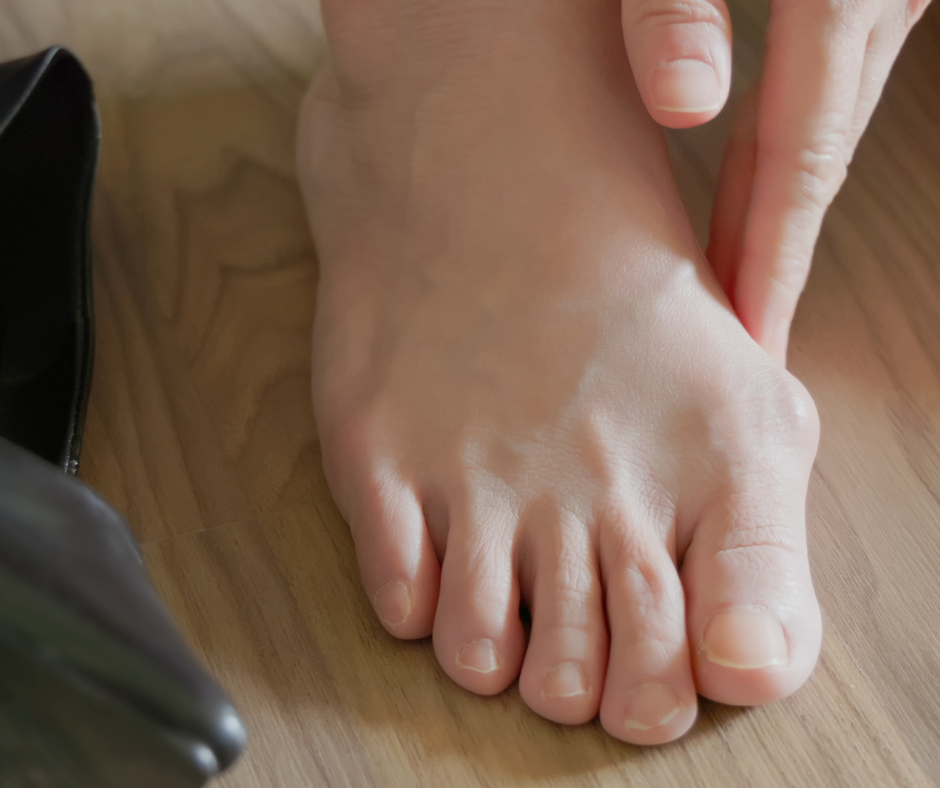
How to Manage Bunions at Home
Living with a bunion means dealing with daily discomfort and struggling to find shoes that fit. While this structural deformity will not simply vanish on its own, you’ve got life to live, and the symptoms must be managed. Fortunately, there are several effective strategies you can use in your living room to significantly reduce the pain and swelling.
If your big toe joint starts to ache after a long day on your feet, Fulshear Foot & Ankle Center is here to help! Keep reading for a practical guide on how to manage bunions at home. We’ll also cover when it makes sense to seek surgical intervention.
Choose Wide and Supportive Footwear
A good first step is evaluating your closet.
- Forcing a misaligned foot into narrow, pointed shoes or high heels will instantly accelerate the joint damageand amplify your pain.
- Swap out tight shoes for footwear that features a wide, deep toe box.
Your toes need plenty of room to move freely without any fabric rubbing directly against the bony protrusion!
Utilize Targeted Padding
Friction is one of the bunion’s worst consequences. When the inside of your shoe constantly rubs against the inflamed joint capsule, it creates painful swelling.
It can also cause painful blisters or bursitis.
- You can purchase non-medicated moleskin or gel bunion pads from the pharmacy.
- Placing these soft barriers over the bump absorbs the friction and provides immediate relief as you walk throughout your day.
Apply Ice for Inflammation
At the end of a long day, the soft tissues surrounding your big toe joint are often severely inflamed and radiating heat.
- Applying a cold compress is a simple and highly effective way to restrict blood vessels and flush the painful inflammation out of the area.
- Wrap a standard ice pack in a thin towel and apply it directly to the bunion for fifteen minutes. Never apply ice directly to bare skin.
Perform Gentle Stretching Exercises
Keeping the joint mobile can help delay the onset of severe stiffness and arthritis.
- Try moving your big toe away from your smaller toes and holding for ten seconds.
- You can also practice picking up small objects, like a hand towel, using your bare toes.
These isometric exercises strengthen the intrinsic muscles of your arch and help maintain your overall foot flexibility.
When to Visit Fulshear Foot and Ankle
While at-home management is fantastic for temporary symptom relief, it is crucial to remember that a bunion is a progressive bone deformity. Ice and padding cannot physically realign your skeletal structure.
If your bunion pain is preventing you from exercising, if your big toe is beginning to overlap your second toe, or if conservative at-home care is no longer working, it is time for a professional evaluation. If surgery makes sense, we will guide you to the right procedure. And if not, we’ll figure out what does make sense together.
Fulshear Foot & Ankle, led by board-certified podiatrists Dr. Yumna Siddiqui and Dr. Kunal Amin, provides comprehensive, patient-focused podiatric care in Fulshear, TX. We treat a wide spectrum of foot and ankle conditions for patients of all ages, covering everything from routine foot care to advanced surgical procedures. New patients are always welcome! Contact us today to schedule an appointment.

